We are experiencing technical issues getting your results at this time. Please try again.

Shop By Category
Summary for Air Compressors
Air Compressors: Powering Your Shop, Site, or Factory
Air compressors are the engine of every pneumatic tool, delivering the power needed for everything from inflating tires and running trim nailers, to powering industrial spray guns and sandblasting equipment. Choosing the right compressor requires balancing tank size (gallons), power (HP), airflow (CFM), and pressure (PSI) to match the demands of your tools and shop size.
Our extensive line includes ultra-quiet, portable options for hobbyists and jobsites, heavy-duty single-stage units for home shops, and high-CFM, two-stage industrial workhorses for continuous factory use.
Frequently Asked Questions
Which compressor type is right for my needs?
Our compressors are separated into three primary categories based on size and application:
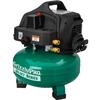
- Quiet Series® Portable (2-20 Gallons): Ideal for trim work, hobby use, and jobsites where noise is a major concern. These oil-free units (1 HP to 2-1/2 HP) run at extremely low decibels (60-73 dB, quieter than normal conversation) and are lightweight and virtually maintenance-free.
- Stationary Shop/Home Use (20-60 Gallons): These units provide reliable, mid-range air volume for general shop tasks like using impact wrenches, occasional painting, and medium-duty framing. They typically feature heavy-duty, oil-lubricated cast-iron pumps for long life and higher CFM than portable models.
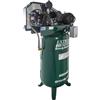
- Extreme Series™ Industrial (60-120 Gallons): Built for commercial and factory environments, these high-HP (up to 10 HP) machines deliver massive, continuous airflow (up to 40 CFM at 90 PSI). They feature ASME-certified tanks, powerful two-stage pumps, and require high-voltage (220V/230V) or three-phase power.
What is the difference between single-stage and two-stage compression?
Compression determines the machine's efficiency and ability to handle high pressure:
- Single-Stage: Compresses air once. It is simpler, economical, and suitable for most general shop needs (100-135 PSI max). All of our portable and standard 60-gallon models use this design.
- Two-Stage: Compresses the air twice, providing significantly higher pressure (up to 175 PSI) and a cooler-running pump. This design is necessary for industrial applications requiring high sustained volume and pressure, such as plasma cutting or sandblasting.
What are the key benefits of our Quiet Series® air compressors?
The Quiet Series® line is engineered with special twin-cylinder or double-piston pumps that operate at very low sound levels (60-73 dB).
- Noise Reduction: This level is comparable to a normal conversation or a household refrigerator, a big difference compared to standard compressors that can exceed 90 dB (the sound of a lawnmower).
- Application: The low noise makes these compressors perfect for indoor use, finished job sites, and any work area where safety and communication are critical.
What do the terms HP, CFM, and PSI mean for my air compressor purchase?
- HP (Horsepower): Relates to the pump's power. Higher HP generally correlates with higher CFM.
- CFM (Cubic Feet per Minute): This is the most crucial rating, indicating the volume of air the compressor delivers at a specific pressure (e.g., 5.6 CFM @ 90 PSI). Your tools' air requirements must be less than the compressor's CFM rating.
- PSI (Pounds per Square Inch): Indicates the maximum pressure the tank can hold. While maximum pressure is important, always match the CFM at your required operating pressure (usually 90 PSI).